rPET and PCR Plastic Explained: A Guide to Recycled Packaging for Modern Brands
What rPET and PCR (post-consumer recycled) plastic are, how used bottles become new packaging, the Thai rule that allows rPET for food, and what to check before you switch.
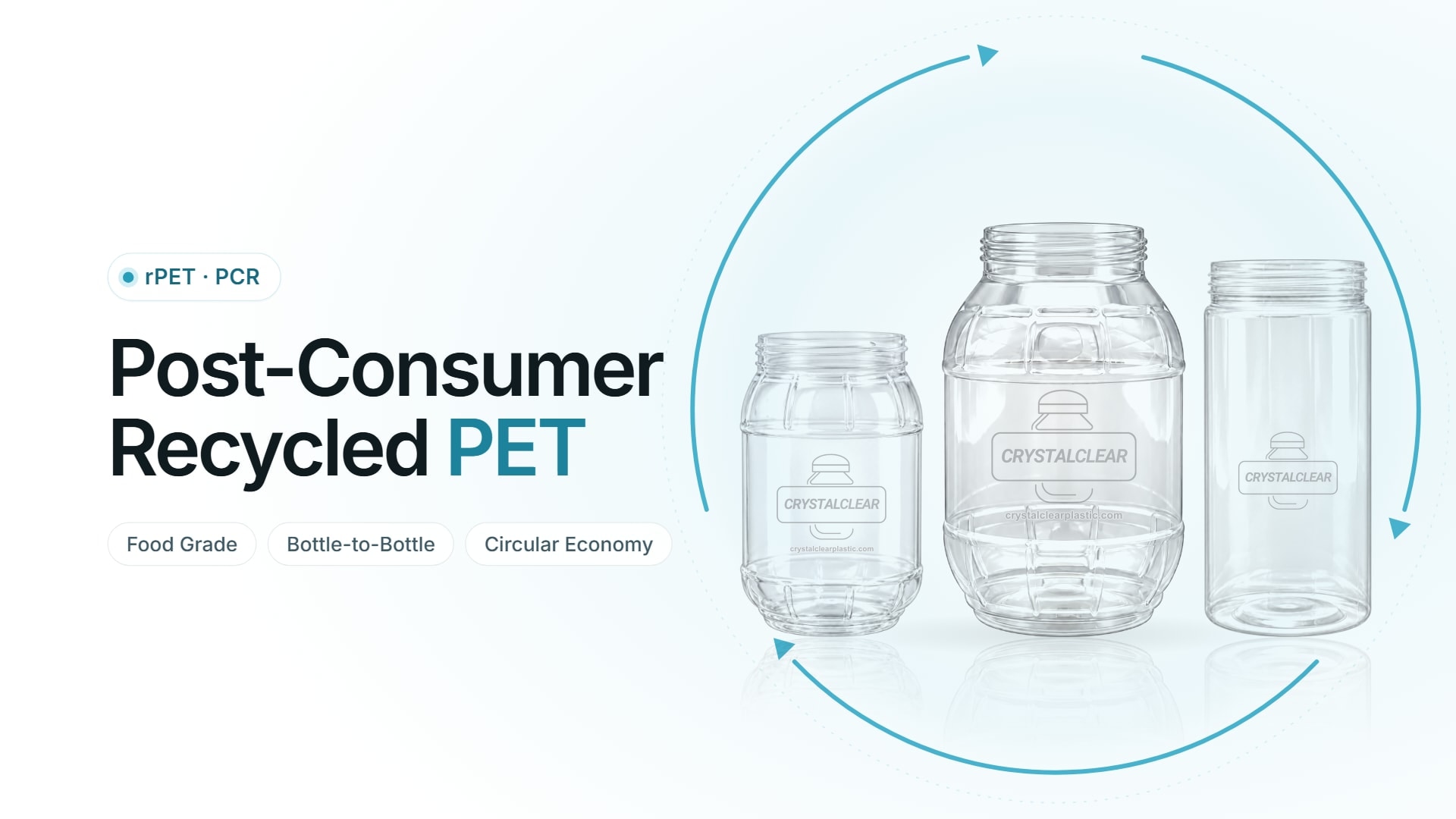
rPET and PCR plastic come up more every year for food, drink and cosmetics brands. Shoppers care more about the environment, and rules in Thailand and abroad now allow recycled plastic in food packaging. Here is what you need to know, in one place.
What is rPET?
rPET (also written R-PET, short for recycled PET) is PET plastic made by recycling used PET bottles and packaging into new pellets, which are then moulded into bottles, jars and tubs again. It keeps what makes PET popular: it is clear, light, strong and does not shatter like glass.
What is PCR plastic, and how is it different from PIR?
PCR (post-consumer recycled) plastic comes from products that consumers have already used, such as drinking-water bottles collected through recycling schemes. PIR (post-industrial recycled) plastic is scrap from the production line that never reached a consumer.
- PCR directly reduces plastic waste after use, but needs more complex sorting and cleaning.
- PIR is more consistent in quality, but does not take waste out of the environment.
So "PCR packaging" or a "PCR PET bottle" means packaging that contains post-consumer recycled plastic, usually stated as a share such as 30%, 50% or 100% PCR. This share is called the recycled content.
From a used bottle to new packaging
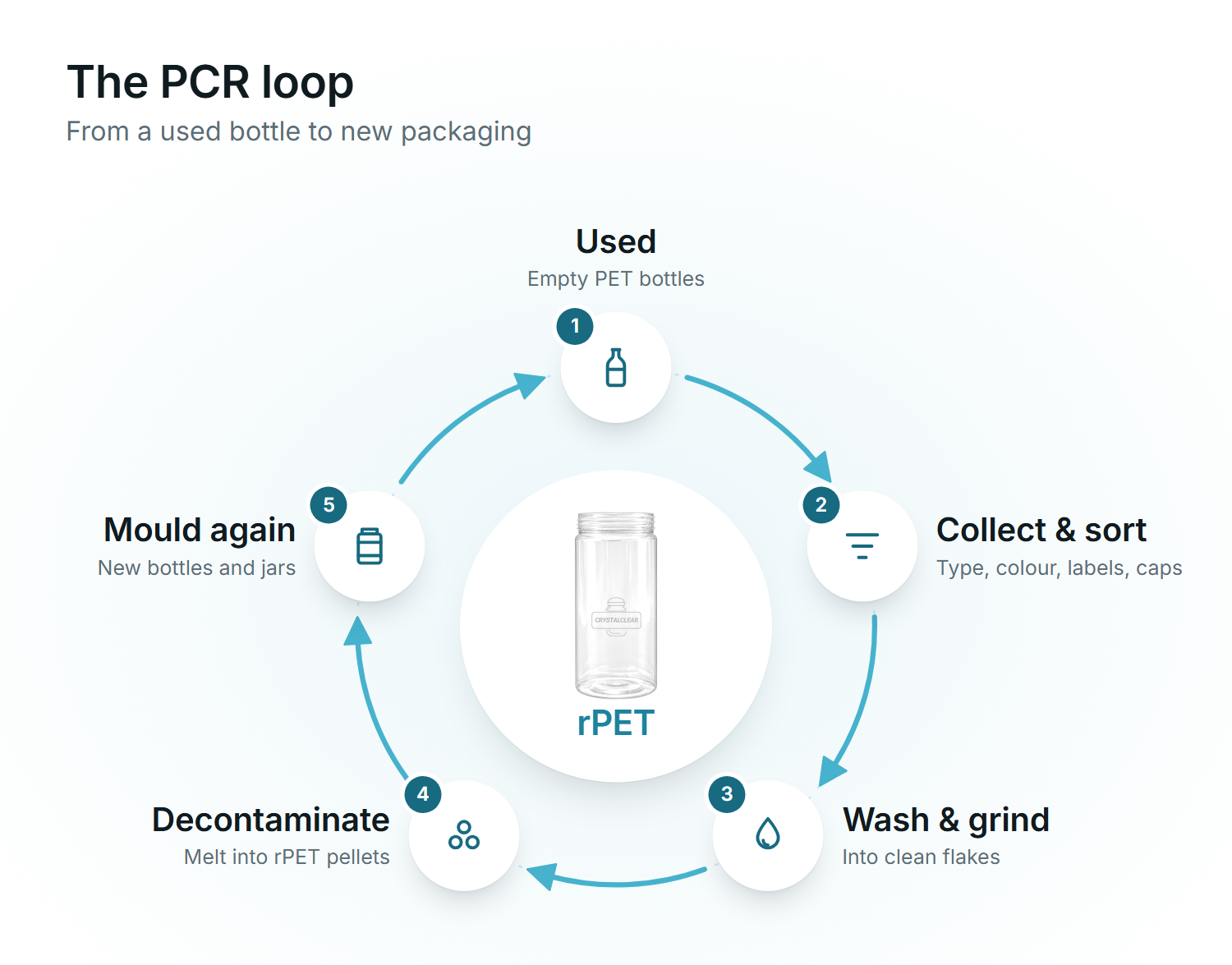
- Use and collect. PET bottles that consumers have used are collected through recycling schemes.
- Sort. They are sorted by plastic type and colour, and labels and caps are removed.
- Wash and grind. Dirt, glue and residues are washed off, and the bottles are ground into flakes.
- Decontaminate and pelletise. For food packaging, the flakes go through a high-efficiency decontamination process before being melted into rPET pellets.
- Mould again. The rPET pellets are made into new bottles and jars, closing the loop known as bottle-to-bottle recycling.
Can rPET be used for food?
Yes, if it is food-grade rPET. In Thailand, Ministry of Public Health Notification No. 435 (B.E. 2565 / 2022) on the quality and standards of plastic containers, in force since 18 June 2022, lifted the old ban and allows recycled PET in food containers. The recycling process must remove contaminants effectively, and the containers need a safety assessment or must use recycled pellets certified to the Thai industrial product standard, as the notification sets out.
Not every recycled plastic can hold food. Choose rPET that has gone through the right process and is approved for food contact.
Why modern brands are switching to rPET
- Less waste and less virgin material. rPET packaging puts plastic back to use instead of making everything from new (virgin) PET.
- It shows what your brand stands for. Packaging is the first thing customers see, and recycled material tells them you care about the environment.
- Rules and export markets. The EU Packaging and Packaging Waste Regulation (PPWR) requires PET packaging that touches food to contain at least 30% post-consumer recycled plastic from 2030, and 50% from 2040.
- The circular economy. It fits the circular economy and the BCG economic model that Thai government and businesses are pursuing.
What to check before you switch
- Colour and clarity. rPET can have a slightly grey or blue tint compared with new PET, depending on the recycled share.
- Recycled content. Agree clearly how much PCR is used, and choose a share that suits your product and budget.
- Label claims. If you print "made from recycled plastic", have supporting documents from the resin or packaging manufacturer, such as GRS (Global Recycled Standard) certification.
- Lead time and price. These depend on the model and order quantity, so ask before you plan production.
Key terms
- rPET / R-PET: recycled PET plastic
- PCR (post-consumer recycled): recycled plastic from products consumers have used
- PIR (post-industrial recycled): recycled plastic from production scrap
- Recycled content: the share of recycled plastic in a package
- Bottle-to-bottle: recycling bottles back into new bottles
- Virgin PET: new PET resin that has not been recycled
- Food grade: material that is safe for food contact
rPET at Crystalclear
The jars and sauce bottles in the Crystalclear catalogue are available in R-PET; look for the "R-PET available" label on each product page. Browse all products or ask our sales team about the models you need.